




Closed-Loop BCI is moving toward mental health
The shift: BCI research is progressing beyond simple signal detection and static classification. The field is prioritizing closed-loop architectures—systems that measure real-time neural activity, deliver instantaneous feedback, and adapt dynamically to foster positive psychological and neural self-regulation. A comprehensive 2026 review in Frontiers in Neuroscience highlights closed-loop EEG neurofeedback as a pivotal paradigm for self-modulated mental health interventions [1].
Why it matters: The industry is evolving from "read the brain" to "read, respond, and adapt."
E-Intel perspective: Accessible mental-wellness tools must move past static diagnostic snapshots. The future lies in continuous sensing paired with intelligent signal interpretation and responsive, personalized feedback loops.

Neurofeedback is becoming more personalized
The shift: Scientific consensus now recognizes that individuals do not respond uniformly to standardized training protocols. Variations in baseline neural dynamics, cognitive load, task engagement, and autonomic arousal dictate outcomes—making dynamic personalization a vital research frontier.
Why it matters: The field is shifting away from rigid, one-size-fits-all protocols (One Protocol → All Users) toward responsive feedback engines (Individual Baseline → Adaptive Feedback → Sustained Learning).
E-Intel perspective: Personalization is central to our core product architecture, such as BBRythm. By interpreting an individual's unique neural and physiological signatures in real time, we build training experiences tailored to the user's immediate state.
BCIs are helping reimagine stroke rehabilitation
The shift: Research published in Frontiers in Human Neuroscience underscores the growing role of BCIs in post-stroke motor restoration [2, 3]. By decoding motor imagery or intentional neural firing (such as P300 event-related potentials), BCI systems connect patient intent directly to visual, auditory, or robotic feedback—even when physical movement is impaired.
Why it matters: Physical therapy can be synchronized directly with neural motor intent, facilitating targeted neuroplastic reorganization.
E-Intel perspective: Neurorehabilitation represents a vital long-term research vector for E-Intel. We see immense promise in systems connecting Neural Intention → Immediate Feedback → Repeated Practice → Neuroplastic Adaptation. Clinical deployment requires thorough, evidence-backed validation.
The rise of closed-loop rehabilitation frameworks
The shift: Modern therapeutic systems are moving away from traditional, static sequences (Patient → Exercise → Therapist → Evaluation) to establish responsive feedback loops: Brain Signal → Real-Time Decoding → Adaptive Feedback → Motor Action → Neural Plasticity
Why it matters: Rather than tracking external physical movements alone, adaptive rehab platforms monitor and respond to what the patient's central nervous system is doing in real time.
Elite performance is becoming data-driven
The shift: Athletes, executives, and high-performance professionals are utilizing neuro-physiological metrics to decode peak cognitive states. A systematic review in Frontiers in Psychology observed quantifiable gains from EEG neurofeedback in athletic focus, psychomotor control, and execution accuracy under pressure [4, 5].
Why it matters: High performance is as much cognitive and physiological as it is physical. Managing arousal, attention, emotional stability, and mental fatigue directly dictates outcomes.
E-Intel perspective: Neurofeedback provides knowledge workers, athletes, and high-stress professionals with real-time visibility into their mental state, turning focus and composure into trainable skills.
Training the mind behind the performance
The shift: Traditional coaching focuses on what actions to perform. Cognitive neurotechnology addresses what state your brain is in while performing.
Why it matters: Athletes and professionals can learn to recognize, enter, and sustain optimal cognitive zones:
Deep Focus & Flow
Calmness Under Pressure
Executive Readiness
Sustained Attention & Impulse Control
Marketing research examines neural responses
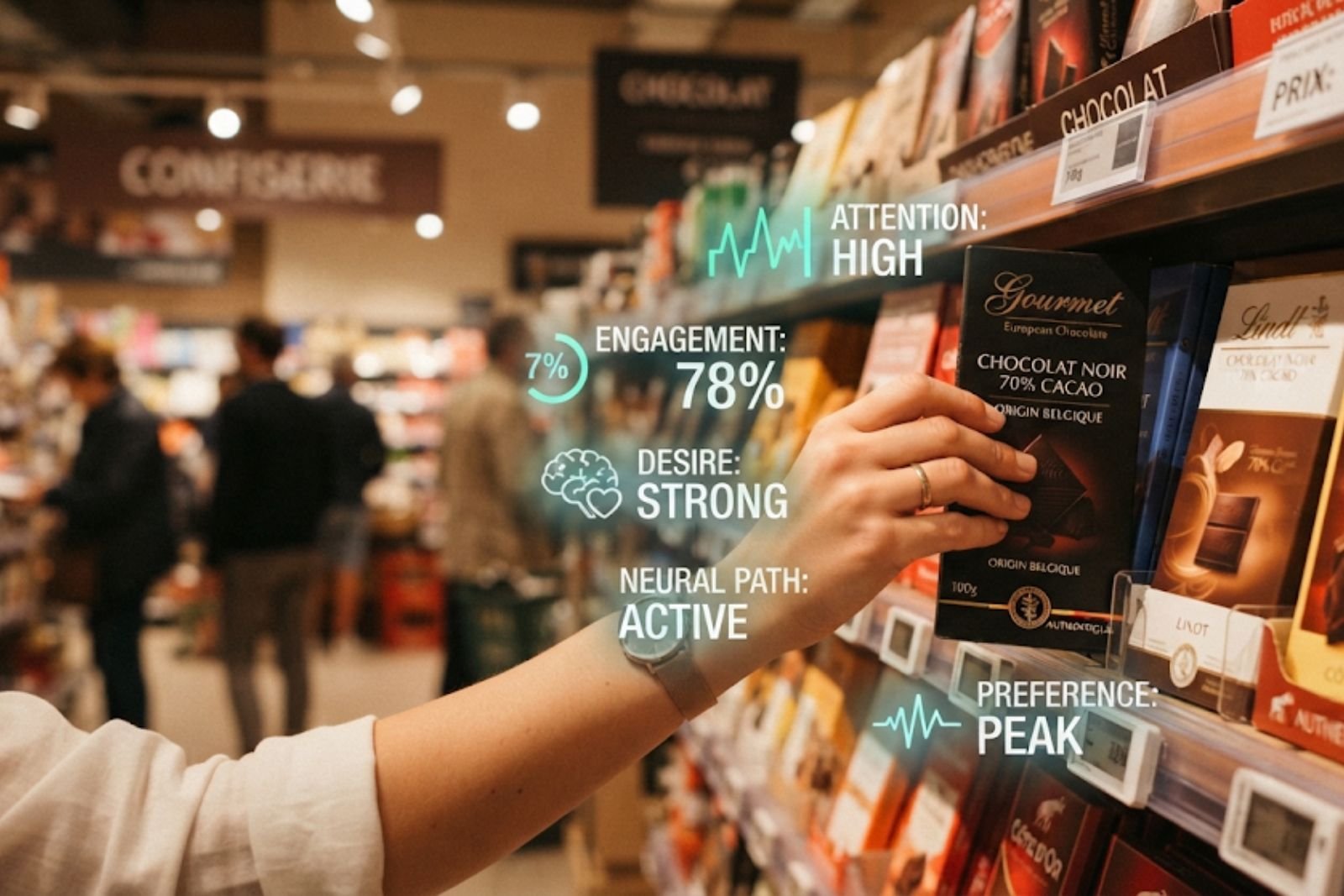
The shift: Traditional consumer research relies on post-hoc surveys and self-reporting, which can be prone to bias. A systematic review examining 113 studies confirmed that EEG acquisition provides objective data regarding attention, emotional engagement, and memory encoding during stimulus exposure [6, 7].
Why it matters: Neural and physiological responses capture subconscious cognitive processing that self-reported surveys frequently miss.
From single metrics to multimodal sensing
The shift: Frontiers research highlights a shift toward multimodal analytics, combining EEG signals with eye-tracking, biometric metrics, and behavioral context to predict consumer choice and engagement [8].
Why it matters: Understanding human intent requires a holistic view: Brain + Body + Behavior + Context.
E-Intel Perspective: Multimodal signal fusion is fundamental to our research strategy. True behavioral insight requires cross-analyzing complementary biological streams.
BCIs Are Becoming Fully Interactive
- First-generation BCI concentrated on passive signal decoding.
- Next-generation BCI establishes real-time bidirectional interaction: Sense → Decode → Respond → Learn.
- This paradigm expands BCI beyond assistive tools into neurorehabilitation, adaptive learning, immersive gaming, and real-time state training [2, 9].
Neuro-Gaming makes cognitive training engaging
- What happens when digital environments react to your mental state instead of just button presses?
- Neuro-gaming integrates real-time BCI signals with dynamic gaming environments [9]. Gamified neurofeedback transforms repetitive cognitive training into an immersive, highly motivating experience.
Toward Brain-Responsive Smart Environments
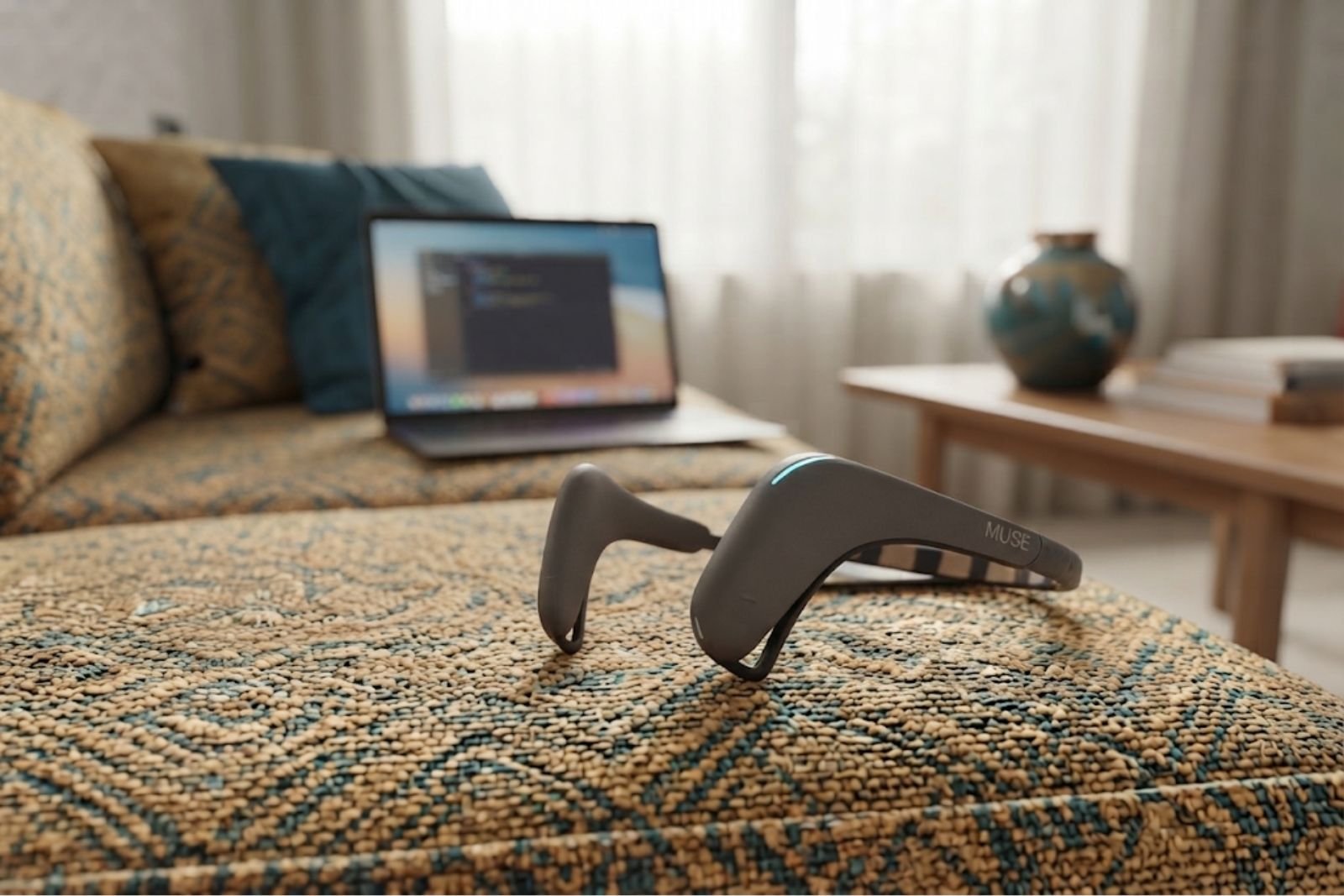
- The long-term trajectory of neurotechnology extends beyond wearable headbands and static computer screens.
- Future environments will ambiently adjust lighting, audio, and workflows based on real-time indicators of cognitive workload, stress, focus, and fatigue.
- Interfaces will shift from passive tools you touch to intelligent environments that respond to your physiological state.
From Isolated Research to Integrated Systems
The most compelling breakthroughs occur at the intersection of disciplines: EEG + Physiology + Artificial Intelligence +HCI + Neurofeedback While individual research fields progress independently, the larger commercial and human opportunity lies in unifying them. E-Intel is dedicated to building non-invasive, personalized neurotechnology that turns physiological data into meaningful, everyday digital experiences.
Science First. Possibility Next.
Not every laboratory breakthrough is ready for consumer deployment, and not every headline reflects robust data.
At E-Intel, our engineering strategy balances scientific curiosity with rigorous discipline. We closely evaluate peer-reviewed research, validate scalable technologies, and maintain a clear distinction between proven paradigms, promising trials, and early-stage concepts.
The future of neurotechnology must be inspiring—but above all, it must be evidence-led.